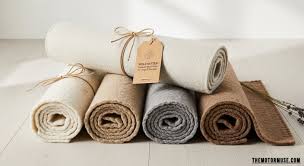
Wollmatten: The Future of Sustainable and Natural Comfort
Woolrich floor and surface coverings are made primarily from sheep’s wool, which is spun into dense, durable layers using traditional textile processes. Wollmatten is a German word that translates into English as “wool mat,” indicating both the nature of the material and the purpose of the product. Textile industry uses such mats for many centuries now; these products are natural and are not synthesized artificially from other substances, unlike plastic-made floor coverings based on petrochemicals. Wool fibers are naturally durable and possess some protective qualities that make them fit perfectly well for household application.
Starting with sheep shearing, the process of manufacturing Wollmatte continues with cleaning wool from natural oil and dirt, followed by carding – straightening of fibers and forming a structure to shape the fibers into. Wool can be processed either through felting, which uses pressure and moisture, or weaving, making it more durable but at the same time keeping its natural beauty.
This results in the mat being strong enough to stand any usage but still rather soft and thus comfortable to walk on. The difference from other kinds of floor covering lies precisely in the natural nature of Wollmatte.
The Traditional Art of Creating Wollmatten
In the manufacture of Wollmatten, there is the use of skills that have been honed over generations. Felting refers to the practice of forming mats from wool by pressing wool fibers against each other using heat and moisture. The resulting mat forms an extremely dense and sturdy layer which maintains its shape over time. The felted mats usually have uniform shapes and texture.
However, if one wants to make designs in Wollmatten mats, he or she can resort to weaving. In weaving, wool threads are interlaced on a loom to form distinct layers. With all the advantages of wool, weaving helps in achieving the required design in the product while maintaining the natural qualities of wool fibers. Some weavers combine felting and weaving methods in making Wollmatten mats.
Modern technology can be employed to make the process more efficient. However, the basic characteristics of wool fibers are retained. They still provide breathability and warmth. Even with technological advances, the art of Wollmatten creation reflects admiration for the craft of textile production.
Environmental Advantages of Worcester
Wollmatten has a great surrounding, hence its selection. Wool is a sustainable raw material due to the fact that it regrows yearly; hence, the use of a renewable source of resources. On top of being renewable, the material is less likely to cause harm to the environment since there is no usage of any fossil fuel-based synthetics in its production.
Wool products can degrade easily without causing any harm to the ecosystem; hence, they are environmentally friendly when compared to other synthetics, including those containing polyester and PVC. Synthetic items tend to take longer to degrade and end up causing pollution in case they are disposed of at landfill sites. In this regard, wool is biodegradable.
Finally, it comes with some benefits related to its capacity to regulate temperatures. For example, this property may result in energy savings in a household due to reduced consumption of heating and cooling appliances in winter and summer respectively.
Practical Applications of Wollmatten at Home and in the Office
Wollmattens are suitable for many spaces and serve multiple functions. It is advisable to use wool mats in offices and studios since they will reduce echo sounds. A high-quality mat should not be subject to wear-and-tear issues.
Beyond flooring, some types of mats are used in yoga, gardening, and industrial areas, where cushioning and insulation are needed. Wollmatten’s regenerative capabilities demonstrate that they are more than just decorative devices; they are functional tools that meet different needs in different situations.
Comparing Woollmatten to Synthetic Alternatives
Various differences exist between wool mats made from organic sources and their synthetic counterparts. The synthetic products are similar in appearance to natural fiber products and can be less expensive. They, however, lack some qualities of the natural product like moisture regulation which affects the level of comfort in confined areas with limited air circulation.
Ductility of the mat also needs consideration in the selection process. Certain synthetic fibers have excellent ductility but deteriorate after coming into contact with extreme temperatures or friction. On the other hand, natural wool fibers tend to naturally contract back to their normal form, thus retaining their strength for many years.
Ductility of the mat also needs consideration in the selection process. When the use of cleaning agents becomes inevitable in order to wash stains out of the wool mat, it is essential to have appropriate materials that will help avoid damaging the wool fibers with chemicals.
Durability of the wool ensures the preservation of its quality. In addition to making the mat more valuable, it also makes it less likely to require constant replacement.
Beautification and Diversity of Designs
Due to varied interior designs, wool mats have timeless beauty. Synthetic rugs usually have a uniform appearance; however, since the texture of the natural fibers varies, they can mimic the appearance of natural fibers.
In addition, they come in various colors, either natural or artificial dye colors. Since wool can absorb dye efficiently, vibrant colors can be achieved through dyeing the wool mat. The weaving technique used adds additional patterns to beautify the rug. It is the fusion of these two features that makes this product very popular both in terms of functionality and as an aesthetic item.
Conclusion: A Thoroughly Designed Option for the Future World
Making a flooring or covering decision means considering different parameters including price, comfort level, and ecological considerations. In case the buyer gives preference to natural products and sustainable approach, then Woolmatten will suit him/her. The natural source, environmentally-friendly characteristics, and practical advantages distinguish them from most artificial substitutes on the market.
Moreover, such mats contribute to environmental sustainability by adding to convenience and comfort. Their exclusivity makes them perfect for households, offices, or special purposes.
Being conscious of sustainable development principles, choosing wool mats means opting for a thoroughly thought-out lifestyle concept. It combines practicality and traditional approach to design, thus combining utility and aesthetics.
By learning more about these mats’ history, production process, and advantages, one can make a right choice.
FAQ
1. Are wool mats right for busy spaces?
The natural strength of wool makes them suitable for low-traffic areas. Thicker or tightly woven versions are recommended for busy areas.
2. Do they need special cleaning materials?
They should be cleaned using gentle substances without hard chemical elements and using soft wool.
3. For how long can Woolmatten last?
Properly maintained wool will serve you for many years to come since wool is durable and light.
